2011
Home > EU Documents >
EU Official Documents
The official texts and documents published by the EU institutions and bodies – Parliament, Council, EU Council, Commission, etc. – have been grouped here. They often form the regulatory basis for occupational health and safety in France and other EU Member States.
Latest EU Documents
2011
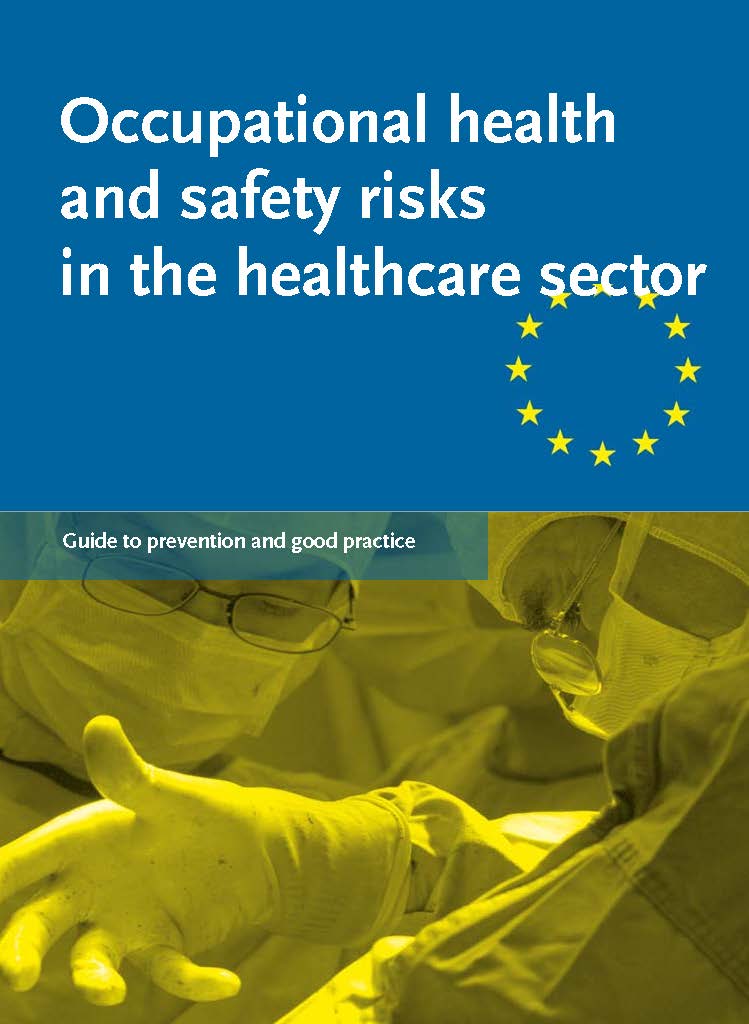
Occupational health and safety risks in the healthcare sector – Guide to prevention and good practice
The main focus of this guide is to present up-to-date technical and scientific knowledge regarding the prevention of the most significant risks in healthcare, especially biological, musculoskeletal, psychosocial and chemical risks, and to support the implementation of the relevant European Union directives in force. Practical instruments to support employers in identifying the risks for the health and safety of their employees and to guide the implementation of preventive measures in their healthcares facilities are outlined and clarified.
2009
Directive 2009/148/EC on the protection of workers from the risks related to exposure to asbestos at work
The exposure of workers to asbestos dust or materials containing asbestos poses risks to their health. This directive establishes protection and prevention rules intended to limit these risks. It is a codified version.
2009
Directive 2009/104/EC concerning the minimum safety and health requirements for the use of work equipment by workers at work
For the purpose of clarity, this directive consolidates Directive 89/655/EC which has been substantially amended several times. The directive lays down the employer’s obligations who has to choose the work equipment according to the specific characteristics of work and to the risks for workers in order to eliminate or minimise the risks; the employer shall provide workers with adequate information and written instructions on the work equipment containing at least the safety and health indications; he shall provide adequate training to workers who are given the task of using this equipment; he shall ensure that the work equipment whose safety depends on the installation conditions is subject to an initial inspection and an inspection after each assembly; he shall ensure that the work equipment is subject to periodic inspections and special inspections each time that circumstances liable to jeopardise the safety of the work equipment have occurred; he shall consult with workers and encourage their participation on matters covered by the directive.
2007
Non-binding guide to good practice for the application of Directive 2003/10/EC “Noise at work”
2007
Community Strategy 2007-2012 on health and safety at work: Improving quality and productivity at work
The strategy for 2007-2012 aims to achieve a sustained reduction of accidents at work and occupational diseases in the EU. It sets out a quantitative objective of 25% reduction of accidents at work through a series of actions at European and national levels in the following main areas: improving and simplifying existing legislation and enhancing its implementation in practice through non-binding instruments such as exchange of good practices, awareness-raising campaigns and better information and training ; defining and implementing national strategies adjusted to the specific context of each Member State. These strategies should target the sectors and companies most affected and fix national targets for reducing accidents at work and occupational diseases ; mainstreaming of health and safety at work in other national and European policy areas (education, public health, research) and finding new synergies ; better identifying and assessing potential new risks through more research, exchange of knowledge and practical application of results.
2006
Non-binding guide to good practice for implementing Directive 2001/45/EC (Work at a height)
This guide which was drawn up by EUROGIP for the European Commission aims at helping especially SMEs choose the most appropriate work equipment for performing temporary work at a height. By putting together the “best practices” identified by a large number of European experts, it also allows the players involved in the prevention of accidents to apply the directive efficiently.
2006
Directive 2006/42/EC on Machinery
The directive aims to ensure the free movement of machines and their accessories, whilst laying down essential requirements regarding the health and safety of workers and consumers. It is based on the principles of the “new approach” to technical harmonisation and standards. In line with this new approach, the design and manufacture of machines and their accessories are subject to essential safety requirements. The directive applies to machines (interchangeable equipment, safety components, lifting accessories, chains, ropes and webbing, removable mechanical transmission devices) and to partly completed machinery.
2006
Directive 2006/25/EC on the minimum health and safety requirements regarding the exposure of workers to risks arising from artificial optical radiation
Optical radiation is defined as any electromagnetic radiation in the wavelength range between 100 nanometers and 1 millimeter. Ionising radiation and electromagnetic fields such as microwaves or radio frequencies are not covered by the text whose scope is furthermore limited to radiation emitted from artificial sources such as lasers and infrared lamps. The directive lays down minimum standards for prevention of damage to the eyes and skin from such radiation. Exposure limit values that should not be exceeded at any time are set out for non-coherent artificial radiation (Annex 1) and lasers (Annex 2). The text takes over, while specifying them, the various obligations for the employer laid down in the framework directive: to assess the risks, implement a plan to reduce those which cannot be eliminated, inform and train the workers. Moreover, the directive provides for specific measures for the workers’ health surveillance. Thus an individual health record shall be made which shall include a summary of the results of the risk assessment. In any event, where exposure limit values are exceeded, as soon as adverse health effects are detected, a medical examination shall be made available to the workers concerned and the employer shall review the risk assessment as well as the measures he had adopted and arrange continued health surveillance.
2004
Directive 2004/37/EC on the protection of workers from the risks related to exposure to carcinogens or mutagens at work
This directive lays down minimum requirements for the protection of workers exposed to carcinogens and mutagens. In order to reduce the risks to the health and safety of workers associated with such an exposure, it sets out exposure limit values as well as preventive measures.